
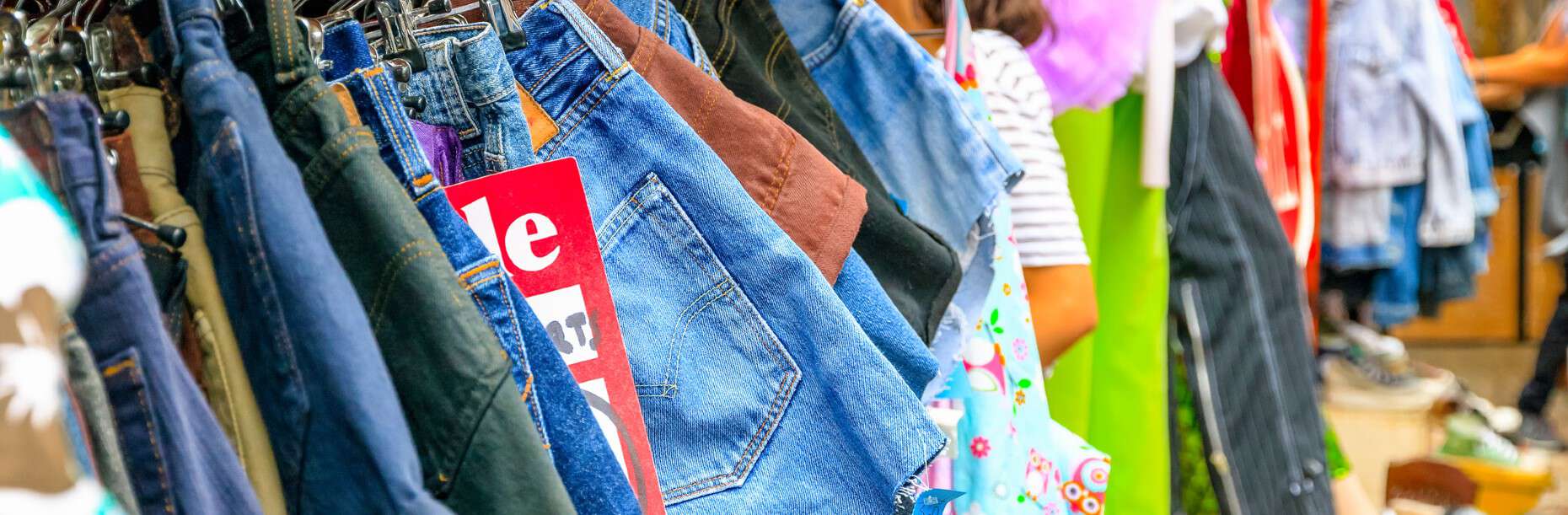
Reduce, reuse and repair clothing waste
Cutting down on clothing waste is great for the environment and for your wallet. When clothes are used again or recycled, it means there is less need to use up resources to create new ones. Keeping clothing (and textile) waste out of the rubbish bin is important too – it stops reusable material going to waste and saves councils money on having to process it. And finally, it means more money in your pocket!
Buy better!
The best way to buy is second-hand. Buy online using platforms like Vinted, Depop and eBay.
If buying new, buy less and buy better. Buy fewer high-quality items instead of stocking up on cheap clothes that don’t last. Create a capsule wardrobe of items that all pair with each other to get your own distinct style and keep it simple when choosing an outfit.
It might take longer – and we highly recommend taking your time before making a purchase (no more impulse buys, please!) – but it won’t cost more as each item will last longer. Your clothes will feel nicer too!
Care for your clothes
Keeping your clothes for longer is key when it comes to reducing waste.
Store your clothes correctly: use strong, sturdy hangers; place cedar blocks in your wardrobe to protect clothes from moths; and fold jumpers, don’t hang them, to keep their shape.
Wash clothes at 30 degrees or lower, zip or button up items and turn them inside-out before putting them in the wash and use mesh bags to prevent fabrics breaking down. And avoid the damaging, high heat of the tumble dryer too.
Reuse your clothes
Holey socks can be used again as cleaning cloths. Frayed jeans can be cut to make jean shorts. Turn old shirts into cloth bags. Dye a dress and turn it into something brand new.
Of course, if you can’t reuse it yourself, someone else might want it. Check out our webpage on recycling clothes and textiles from home and waste locations around the county.
Repair your clothes
A missing button, a broken zip or a torn hem? No problem. Use one of the many tailors across the county or take a course in sewing, crafting or upcycling.
To find your nearest second-hand store, textiles recycling bank, community recycling centre, tailor or sewing course, visit our zero-waste map.
In some areas of Surrey, clothes and textiles are collected by local councils. To find out more, visit our webpage on recycling clothes and textiles from home.
Ask us a question
Ask us anything about waste including what to do with an item you’re not sure about.
Sign up to our newsletter
We’ll send you regular tips, news and advice on how to recycle more and waste less.