
How to recycle right
How do you clean recycling?
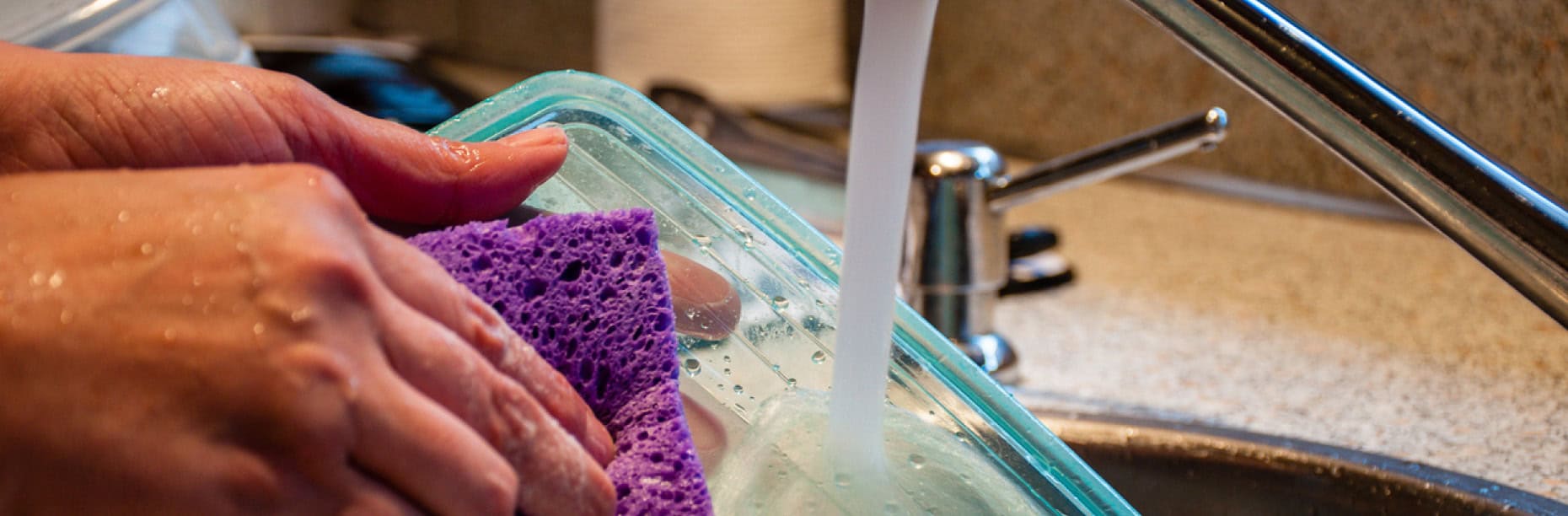
All items that go in your recycling bin should be empty and / or free of food and liquid. The best way to do this is either to give the item a quick rinse under the tap or to dunk your items in your washing up water after you’ve finished washing up.
We’re not expecting every item to be gleaming as if new and different items may require different levels of effort. But if you follow the above advice and do your best, you’ll be fine.
When items are made from mixed materials it can cause confusion. Typical items that you might come across include a hard plastic yoghurt pot (recyclable by your council) with a soft plastic lid (not recyclable by your council) or a paper bread bag (recyclable by your council) with a plastic window (not recyclable by your council). You may even come across paper lined with foil or a thin layer of plastic (both of which are not recyclable by your council).
If you can’t separate the non-recyclable part of the item from the recyclable part, put the whole thing in the rubbish bin.
If you can separate the two parts of the item, put the recyclable part in your recycling bin and the non-recyclable part in your rubbish bin.
If you have a plastic bottle with a plastic lid, recycle with the lid on. Anything else, i.e., glass bottles and jars, please put lids in separately so that they can be recycled with items made from the same material.
You don’t need to remove labels from packaging made of different materials. This may include items like a plastic bottle of squash with a paper or plastic label.
No. Labels on packaging don’t always get recycling advice right and can cause confusion as they are giving advice for the whole country when recycling rules differ depending on where you live.
Your councils are responsible for collecting and disposing of your waste. They work with private contractors, which process the material using equipment to sort it before it is sent on for recycling. It is important that only items that your council’s contractors can process are put into recycling bins.
In conclusion: only your local councils can tell you accurately what should and shouldn’t go in your recycling bin.
It all depends on how much room you’ve got.
If you’ve got lots, you may want to have a specific recycling bin as well as a rubbish bin, probably in your kitchen. Remember, keep your recycling loose and not in bags when you empty it into your outside bin. It’s a good idea to have a separate bin for recycling in your bathroom too, to keep shampoo bottles, toothpaste and toilet paper tubes separate from other bathroom waste.
If you don’t have enough room to do the above, you could try putting a bag / box or two under the sink for your recycling and empty it into your outside bin once it gets full. And you may want to remove recyclable items from your bathroom bin and put them in your recycling bin once that gets full.
We know kids’ bedrooms are a problem! Try to teach them the basics of recycling. And if that fails, do it for them! The most important thing is that they don’t put items with food on or in or items that can’t be recycled in the recycling bin.
For more information, visit our webpage on reducing and reusing your household waste.
There are plenty of ways you can recycle more material than your local council collects at the kerbside. To find out about recycling banks, community recycling centres, recycling at shops and through other organisations, visit the reduce, reuse, repair, recycle more section of our website.
Ask us a question
Ask us anything about waste including what to do with an item you’re not sure about.
Sign up to our newsletter
We’ll send you regular tips, news and advice on how to recycle more and waste less.