
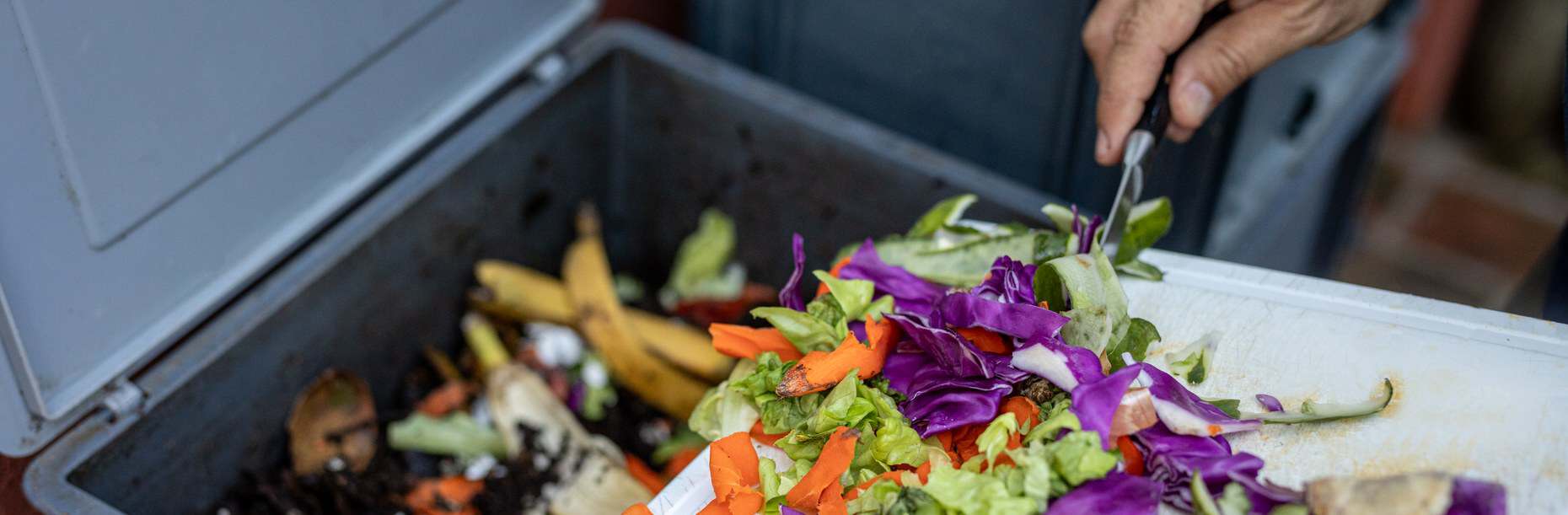
Your food waste bin
Your district or borough council is responsible for collecting your waste. To find out when your bins are collected, report issues with bin collection or order new or replacement bins, visit our page on kerbside waste collections.
To find out what to do with different types of food, visit our webpage on can you recycle food?
Most households have a food waste caddy, which is kept indoors and into which you put your food waste, and a food waste bin, which stays outside and is emptied by a waste collection crew.
When your caddy is full, empty it into your outside food waste bin and put it out for collection on bin day.
You don’t need to line your food waste caddy but most people do because it helps keep the caddy clean.
Ideally, you should line your food caddy with one of the following:
- A compostable food waste bag
- A plastic carrier bag
- A used plastic bag such as a cereal, salad or bread bag
You can also line your caddy with the following types of paper, although it is not preferred as it creates significant mess within food waste collection trucks:
- Newspaper
- Paper bags
- Paper
- Kitchen towels
Do not line your food caddy with:
- Black bin bags
- Any other type of packaging
Once collected, food waste is turned into energy, which is used to power the National Grid, and soil fertiliser, which is used to help new crops grow. Find out more by visiting our webpage on what happens to your waste.
Recycling food waste is good for the environment. When it is recycled, it saves on using up resources. It also saves councils money when you recycle food waste as it costs more to process rubbish than it does to recycle food waste.
No. Food waste collection crews carry service bins, which look the same as household rubbish bins, and into these they empty food waste from outdoor food bins. When full, they empty the service bin by tipping the waste into the truck for the food to be processed separately.
For tips and advice, visit our webpage on reducing your food waste.
Ask us a question
Ask us anything about waste including what to do with an item you’re not sure about.
Sign up to our newsletter
We’ll send you regular tips, news and advice on how to recycle more and waste less.