
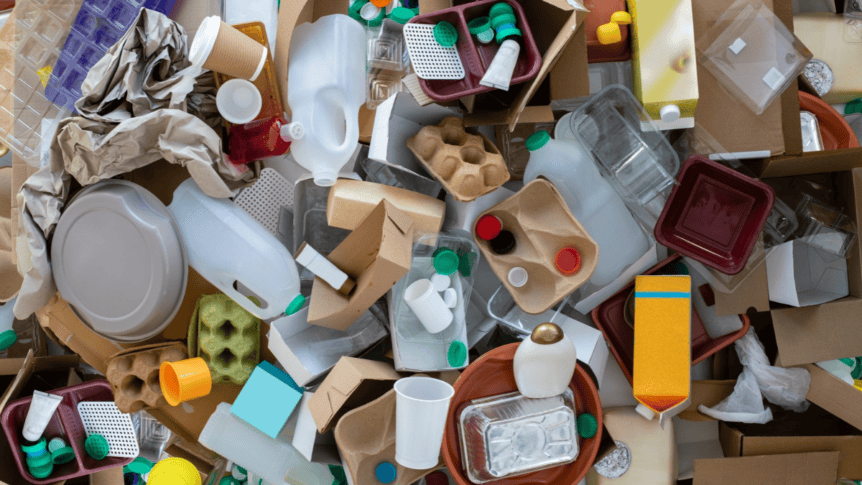
You asked, and we listened. Knowing what can and can’t go in your recycling bin shouldn’t be a guessing game. That’s why we’ve made it easier than ever to find the right way to dispose of everyday household items.
From yoghurt pots and soup cartons to deodorant cans and squeezy plastic tubes, our A-Z checklist of common waste items shows you exactly what to do, whether it needs a quick rinse, to be separated or in some cases, scrunched!
Can’t spot your item on the list? Don’t fret. Our online search tool covers over 1,000 items, helping you quickly find out which bin an item belongs in and which services are available locally.
But before you get started, let’s go back to basics. Here’s some things to remember when recycling at home:
Clean and loose
All recycling needs to be clean so you may need to give some items, such as yoghurt pots, margarine tubs and jam jars a quick rinse. Food, grease and liquid left behind can ruin more than just your bin. They can ruin a whole truckload of recycling, which would then be treated as rubbish instead.
Once clean, place your recycling loose in your bin. There’s no need to use a bin liner.
New items to recycle
Did you know the law around household waste collections changed earlier this year?
This means councils across Surrey (and the rest of England) now collect more items for recycling, alongside the items you already recycle at home. These include:
- Foil
- Empty aerosol cans
- Squeezy metal or plastic tubes
- Food and drink cartons
- Non-black plastic plant pots
Key items that cannot be recycled
Product packaging, a quick google search or even advice from your neighbour can sometimes be misleading. Recycling collections can vary depending on where you live, so putting something in your recycling bin that isn’t accepted by your council could mean your bin is refused for collection.
The following items cannot be recycled at home anywhere in Surrey:
- Greasy pizza boxes
- Tissues
- Takeaway coffee cups
- Bubble wrap
- Nappies
When it comes to waste and recycling in your area, your local council is the best source of information for what can and cannot be recycled.
For more information and guidance on recycling, visit the can you recycle section of our website.